Between two homes
I grew up in Missoula, Montana, and traveled to Sendai, Japan during the summers to visit my Japanese family.
Missoula gave me a love for nature, the outdoors, community, and the feeling of being connected to the people around me. Japan offered another world to explore: a different culture, language, and way of understanding life.
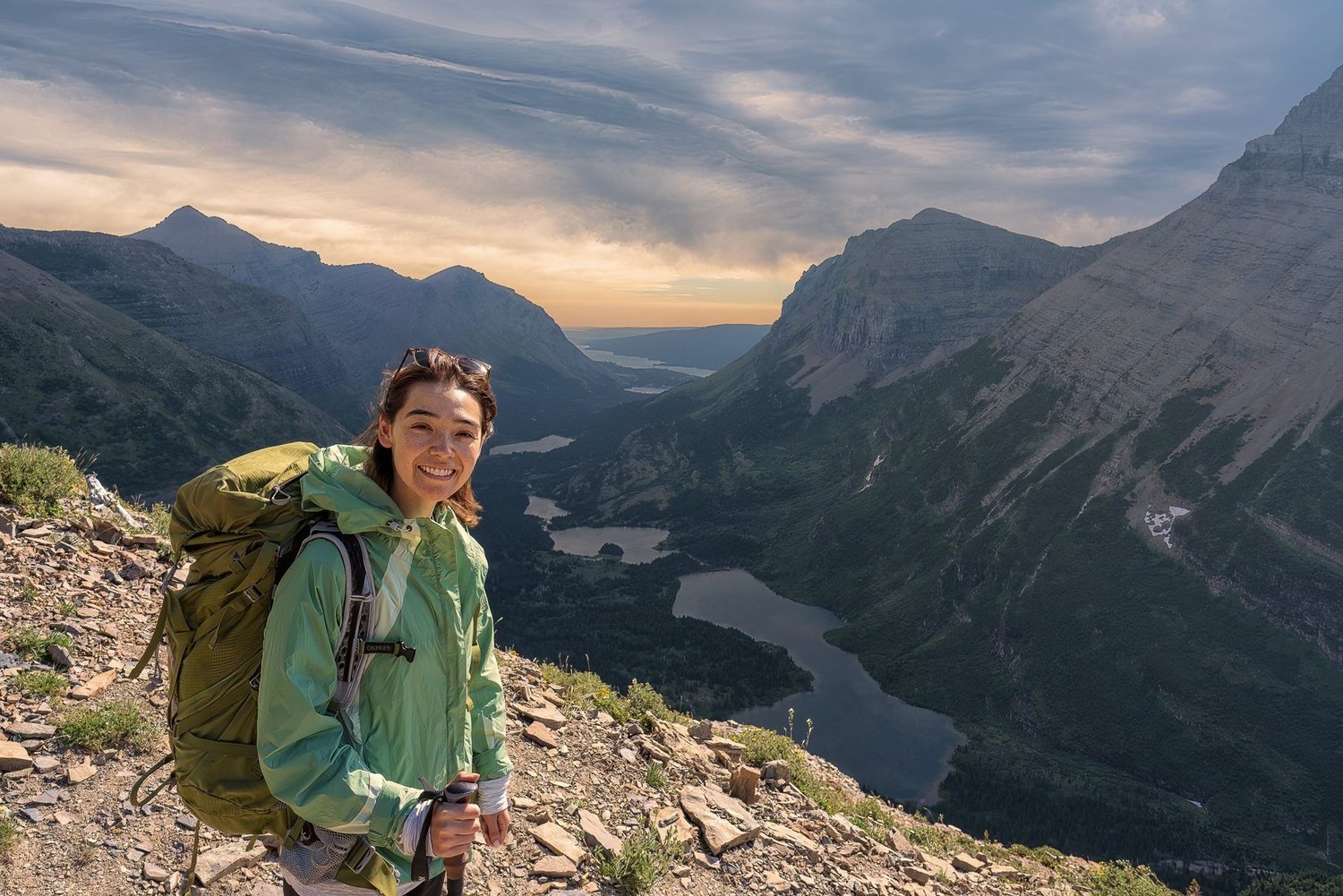 Backpacking in Montana’s Glacier National Park, one of my favorite places on earth.
Growing up between two cultures was a gift, but it also came with questions. Where did I belong? What made a place home? And who was I when I moved between different worlds?
In 2018, I moved to Tokyo for graduate school. I found myself in a city of trains, endless movement, and millions of people, navigating a new environment while still carrying some of those familiar questions about belonging.
Looking back, I can see how these experiences shaped my curiosity about identity. Not just the identities we inherit or present to the world, but the relationship we have with ourselves underneath them.
The person I thought I needed to become
For a long time, I believed that achievement was a way to find security, acceptance, and validation.
I worked hard. I pursued academic success. I learned to be accommodating, to say yes, and to pay attention to what other people needed. From the outside, many of these things looked like strengths. And in many ways, they were.
But I gradually began to recognize the cost of always trying to get things right, be enough, and earn a sense of belonging.
Sometimes, I was saying yes when I wanted to say no.
Sometimes, I was looking outside myself for answers I hadn’t given myself the space to discover.
Sometimes, I was so focused on becoming the person I thought I needed to be that I lost touch with what I actually felt, wanted, and valued.
I began to recognize a pattern of self-abandonment: the subtle ways we disconnect from ourselves in order to feel loved, accepted, successful, or safe. I saw how this could show up in achievement, relationships, and the expectations I placed on myself.
And I started asking a different question.
What if belonging wasn’t something I had to earn? What if it could begin with the relationship I developed with myself?
Learning to meet myself differently
During my PhD journey in international relations, I began exploring coaching and turning my curiosity inward.
I became interested in the patterns beneath our behavior, the beliefs we carry, the emotions we struggle to meet, and the ways our experiences shape how we move through life.
I started to understand that awareness alone doesn’t always change a pattern. We can know why we do something and still find ourselves doing it again. We can understand what matters to us and still struggle to live by it. We can want something different and feel resistance when it’s time to take the next step.
For me, this opened up a deeper exploration of acceptance: learning to meet my experiences, emotions, and patterns with greater compassion rather than treating every uncomfortable part of myself as something to overcome.
From there, action began to look different, too. Instead of trying to force myself into another version of who I thought I should be, I could begin asking what felt true, what mattered, and what I was willing to choose.
This continues to be a practice, not a destination. And it has become central to the work I share with others.
